
AI in Philanthropy: Key Takeaways from a Conversation on What’s Next

AI in Philanthropy: Key Takeaways from a Conversation on What’s Next
Author: Erin Van Zee, APR
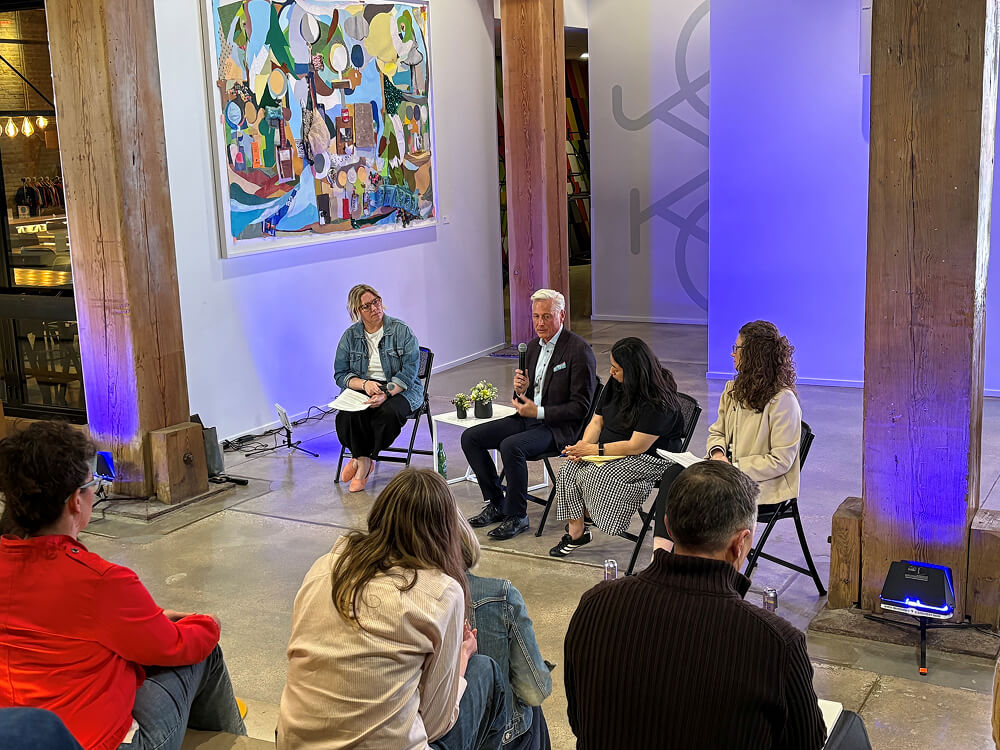
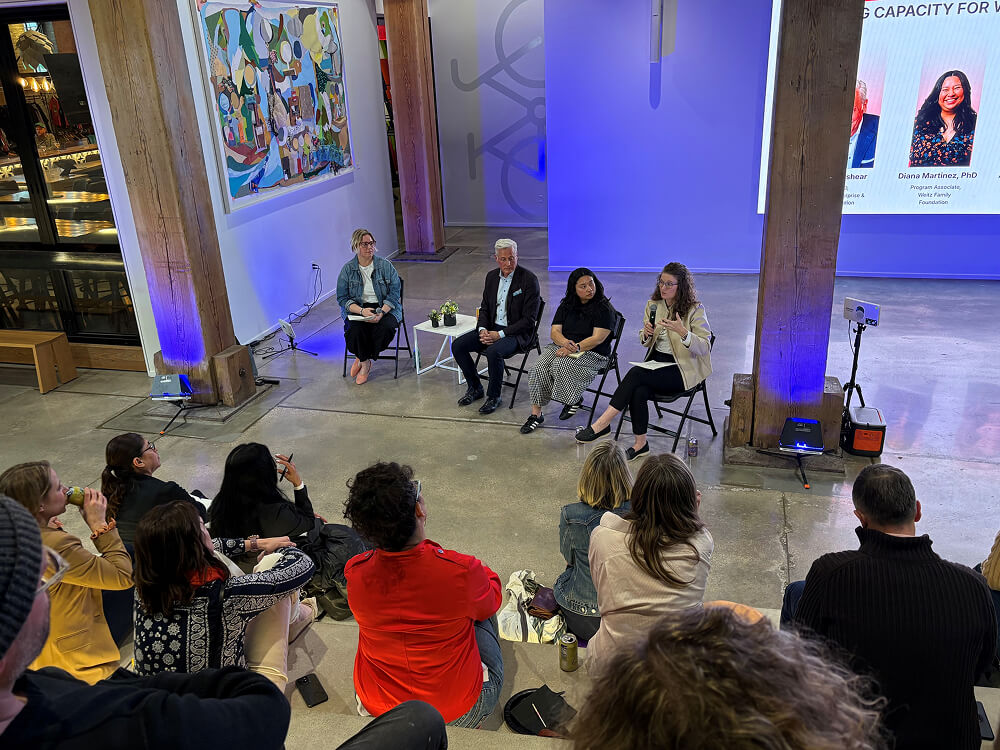
At a recent Orchard AI panel, I had the opportunity to moderate a conversation with leaders from foundations and the nonprofit sector about how artificial intelligence is beginning to shape their work.
What stood out most wasn’t necessarily a sense of certainty, but rather a shared willingness to engage thoughtfully with a rapidly evolving tool. The discussion moved beyond headlines and into lived experience — how AI is being used today, where it is proving valuable, and where important questions still remain.
Here are a few reflections that stayed with me following that conversation.
Start with the work, not the technology.
One of the clearest takeaways was the importance of beginning with real organizational challenges. The most effective uses of AI are not driven by a desire to adopt new technology, but by a need to address persistent friction points, whether in reporting, communications, or internal workflows. When organizations start by asking where time is being lost or where processes feel unnecessarily complex, AI becomes a practical tool rather than an abstract concept. That shift in mindset is critical.Adoption is happening, often without structure.
Across the sector, AI is already in use. At the same time, much of that use is still informal and, in some cases, unspoken. In the conversation, we heard about teams experimenting openly, as well as individuals who are using these tools quietly, unsure of whether it’s appropriate to acknowledge it. That lack of clarity creates an uneven landscape, and without shared norms or guidance, people may either avoid the tools entirely or use them without clear boundaries. This points to a need for more intentional organizational conversations about expectations, transparency, and appropriate use.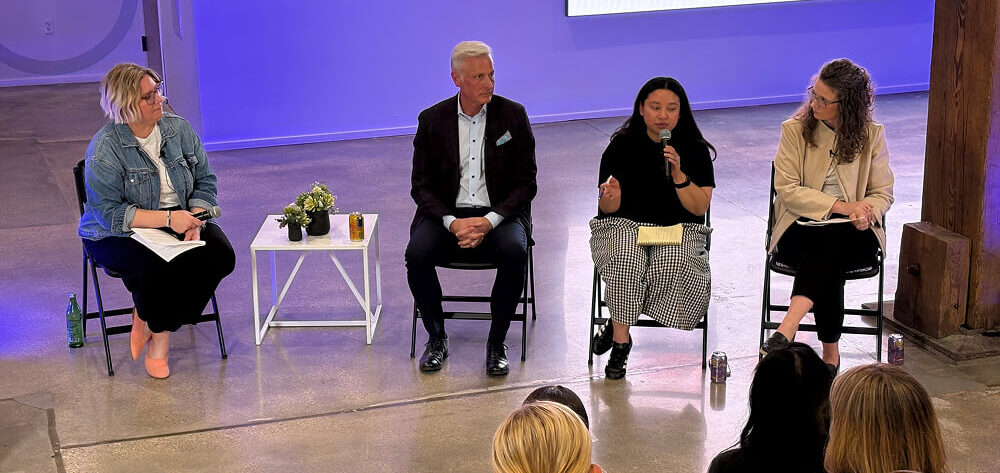
The most immediate value is time.
One of the most consistent themes was the tangible impact AI is already having on day-to-day work. It’s helping teams draft communications, summarize complex materials, and translate notes into structured outputs.
These are not small efficiencies; in some cases, tasks that once took over an hour can now be completed in a fraction of that time. For organizations operating with limited capacity, that shift is meaningful. But what matters just as much is what happens with the time that is created.
From tool to thought partner.
Another shift I found particularly compelling was how people are beginning to use AI not just as a tool, but as a thought partner. Rather than treating it as a search engine, panelists described using AI to challenge assumptions, refine ideas, and explore alternative perspectives. It becomes a space to test thinking, rehearse conversations, and identify blind spots.
That evolution signals something deeper, suggesting AI’s potential to strengthen how we think, not just how we produce.
Creating space for more human-centered work.
Throughout the discussion, there was a strong sense that AI, when used well, can create space for more meaningful work. In my own experience, in my full-time role at RDG Planning & Design, we often talk about “automating the mundane so we can focus on the creative.” That same principle applies here. When administrative tasks are streamlined, there is more capacity for relationship-building, strategy, and community engagement.
AI doesn’t replace the human element of this work. It has the potential to make more room for it.
The risk of simply doing more.
At the same time, this increased capacity introduces a real tension. The nonprofit sector is already full of people who are deeply committed to their work; if AI enables us to do more, the question becomes: will that space be used intentionally, or will it simply be filled with additional demands?
Several panelists raised this concern directly. Efficiency alone does not guarantee better outcomes, and without clear boundaries, it can just as easily contribute to burnout.
Voice, trust, and differentiation matter more than ever.
As more organizations begin using AI for writing and communication, another challenge is emerging: everything can start to sound the same. In a sector built on trust, relationships, and authenticity, that uniformity matters. An organization’s voice — how it expresses its mission, its values, and its impact — remains one of its most important assets.
AI can support that work, but it cannot replace it. Maintaining clarity of voice and staying grounded in what makes each organization distinct will be increasingly important.
Access and literacy will shape what comes next.
Finally, one of the most important concerns raised was around access, not just to the tools themselves, but to the knowledge required to use them effectively. For smaller organizations in particular, cost and training can be real barriers. And even when tools are available, their value depends heavily on how they are used.
Without intentional investment in learning and support, there’s a risk that some organizations will be left behind, not because they lack interest, but because they lack the resources to fully engage.
Looking Ahead
As we look to the future, one thing feels increasingly clear: the question of whether to use AI is quickly becoming less relevant. The more important questions are how we use it, what values guide its application, and how we ensure it strengthens rather than diminishes the human aspects of our work.
If you haven’t started using AI, there’s one piece of advice I would carry forward from this conversation: start small and start intentionally. Apply AI to a real challenge. Use it to test your thinking, not just to generate outputs. And most importantly, stay grounded in your purpose. Because while the technology will continue to evolve, the core of this work — building relationships, fostering trust, serving communities — will remain deeply human.
At Orchard AI, this is the work we are focused on every day: helping nonprofits and foundations build practical, responsible AI capacity that aligns with their values and strengthens their impact. If your organization is beginning to explore these questions, we welcome the opportunity to connect.
Erin Van Zee, APR
As a communications professional with 15+ years of experience in marketing, PR and brand management, I’m passionate about using strategic storytelling to elevate brands and connect with audiences. I’m a firm believer in community engagement and the power of diversity, equity and inclusion, and have been actively involved in several civic and professional organizations, helping foster positive change. When I’m not working, you’ll likely find me outdoors with my husband, Tyler, and our two dogs, Ziggy and Zelda, or volunteering in my local Omaha community.
